
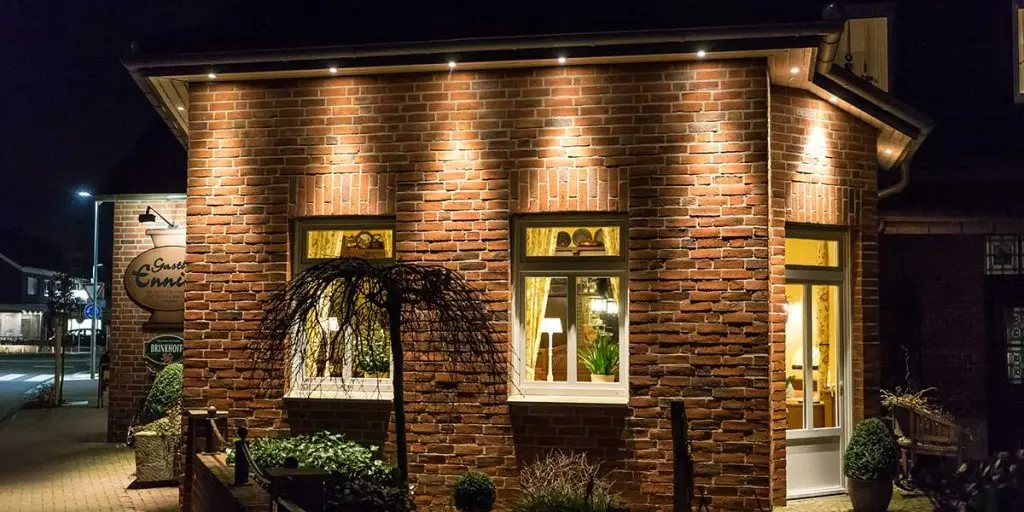
Standing on the curb at dusk, it’s easy to see when a home’s exterior lighting falls flat instead of highlighting its best features. Knowing where to place uplighting on your house can transform a plain façade into a warm, dimensional display after dark while also improving outdoor security around your property.
Austin Outdoor Lighting Design works with homeowners to design landscape lighting that highlights the right spots without overdoing it. Our guide walks through the placement principles that make house uplighting look intentional rather than random.
What Uplighting Does for Your Home’s Exterior
Exterior uplighting works by casting light upward onto a surface, creating shadows and highlights that overhead lighting can’t achieve. This technique reveals texture on materials like brick and stucco that would otherwise disappear in the dark.
Following basic outdoor lighting tips can help you avoid common mistakes like harsh glare or uneven coverage. The goal is subtlety, not a stage production. Done well, uplighting draws the eye to specific architectural features without making the whole house look like it’s under a spotlight.
Where To Place Lights on Columns and Pillars
Columns and pillars are natural candidates for uplighting because their vertical shape catches light beautifully. A single fixture at the base, aimed straight up, is usually enough for most columns when installed by professionals, making choosing the right lighting company an important part of achieving the best results.
If you’re wondering where to place uplighting on your house for porch supports, start with one light per column and adjust the angle until the beam covers the full height. Avoid placing fixtures too close to the base, since this can create a harsh hot spot near the ground.
Spacing for Multiple Columns
When a porch has several columns in a row, keep the lighting angle and fixture distance consistent across all of them. This creates a uniform look instead of one column appearing brighter than the rest.
Highlighting Architectural Features and Trim
Architectural features like dormers and decorative trim benefit from uplighting placed a foot or two away from the wall. This distance allows the beam to spread across the detail rather than concentrate in a small area.
For a front façade with varied rooflines, consider using fixtures with different beam widths. A narrow beam works well on tall, narrow features, while a wider beam suits broader wall sections, similar to the techniques used for illuminating trees in your yard.
Here are a few placement basics to keep in mind:
- Corners and edges: Place a fixture near each corner to define the home’s shape and avoid flat, shadowless walls.
- Textured surfaces: Position lights close to stone or brick and aim them at a low angle to bring out texture through shadow.
- Peaks and gables: Use a single upward beam centered beneath the peak to draw the eye toward the roofline.
Getting these details right is a big part of knowing where to place uplighting on your house.
Choosing the Right Lighting Angles
Lighting angles determine whether a feature looks dramatic or washed out. A steep upward angle close to the wall tends to create strong shadows, while a lower angle from farther away produces a softer wash of light.
Testing angles at night before finalizing fixture placement is the only reliable way to know how a design will actually look. What seems right during the day often shifts once the sun goes down. Small adjustments, even a few inches or a slight tilt, can make a noticeable difference in how a feature appears after dark.
Balancing Uplighting With Landscape Elements
Trees, shrubs, and garden beds near the house can affect how uplighting reads from the street. Landscape lighting placed too close to plants may get blocked as they grow, so it helps to think ahead.
Coordinating house uplighting with nearby accent lighting on trees or garden features creates a cohesive nighttime look. Instead of isolated bright spots, the property feels like one connected design.
Avoiding Overlap and Glare
Two fixtures aimed at the same spot can wash out detail rather than enhance it. Space uplights far enough apart so their beams complement each other rather than compete.
Glare from a window or nearby seating area is also worth checking before you finalize placement. Walking the property at night from multiple angles helps catch these issues early.
Let Austin Outdoor Lighting Design Illuminate Your Home
Knowing where to place uplighting comes down to understanding your home’s architecture and testing angles until the balance feels just right. Austin Outdoor Lighting Design has experience working with a wide range of architectural styles throughout central Texas. Our team designs custom lighting layouts tailored to each home’s unique features.
Call us today at (512) 601-4844 to schedule a design consultation. We’re happy to share more landscape lighting ideas during a consultation.

With over 17 years of hands-on industry experience, founder James Snow leads a unique “Dream Team” of designers and technicians at Austin Outdoor Lighting Design. Specializing in high-end residential, commercial, and security lighting, James combines low-voltage LED innovations with custom architectural techniques to make the winning difference for properties across Greater Austin.