
Texans use their decks as everyday living spaces, not just as afterthoughts or seasonal add-ons. Thoughtful lighting improves safety, usability, and atmosphere while respecting property owners’ preference for controlled, low-glare illumination.
As the local leader in outdoor lighting, we’d like to share information about the most common types of deck lights we install to help homeowners plan a balanced system that performs well year-round without overwhelming the space.
How Professionally Designed Outdoor Lighting in Austin, Texas, Supports Outdoor Living
Well-planned deck lighting fits into a broader exterior strategy. Outdoor lighting design considers circulation paths, sightlines, and how different fixtures interact across the property. For homeowners researching outdoor lighting in Austin, Texas, understanding how deck fixtures integrate with pathways, landscapes, and architectural features helps create cohesive nighttime environments that feel safe and inviting.
1. Deck Post Cap Lights Add Structure and Soft Perimeter Glow
Deck post cap lights sit atop railing posts and define deck boundaries after dark. They deliver subtle ambient light that frames the space without harsh brightness. Experts often recommend shielded designs to keep light directed downward and reduce glare near seating areas.
2. Recessed Deck Lights Create Clean, Modern Sightlines
Recessed deck lights install flush within the deck boards or fascia. They mark edges and transitions while staying visually unobtrusive. When aimed correctly, they improve navigation without exposing the LED source directly to eye level.
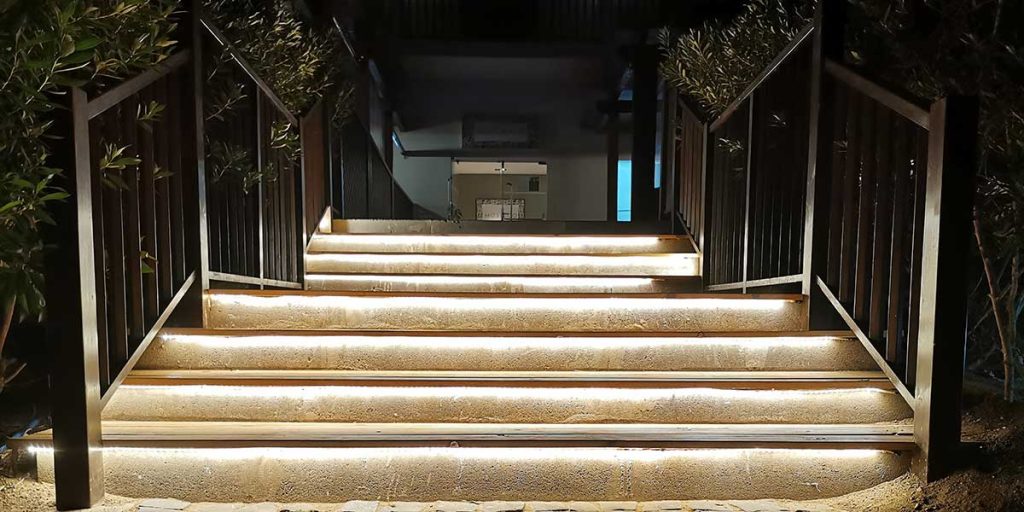
3. Stair Riser Lights Improve Nighttime Safety
Stair riser lights mount to vertical stair faces to evenly illuminate each tread. They provide one of the most effective safety upgrades for multi-level decks, especially when paired with warm color temperatures.
4. Under Rail Deck Lighting Builds Ambient Atmosphere
Under rail deck lighting uses concealed linear fixtures or LED strips mounted beneath rail caps. This approach creates a soft wash of light across the deck floor, ideal for entertaining while minimizing glare and light trespass.
5. Low-Voltage Deck Lighting Offers Flexible System Design
Low-voltage deck lighting systems operate on 12 volts, making them safer and easier to expand over time. Trusted professionals favor this approach because it supports zoning, dimming, and multiple fixture types within one cohesive layout.
6. Solar Deck Lights Provide Simple Accent Solutions
Solar deck lights work well for decorative accents or locations far from power sources. While output varies with sunlight, they offer a wiring-free option for post caps or small perimeter highlights.
7. Choosing Brightness Without Overdoing It
Homeowners often focus on buying bright outdoor lights, but effective deck lighting relies on placement and layering rather than raw lumen output. Targeted illumination on stairs, edges, and gathering areas delivers clarity without harsh glare.
Plan a Balanced Deck Lighting System With Professional Insight
A successful deck lighting plan blends safety and ambiance using complementary fixtures. Begin with stairs and transitions, add perimeter definition, then layer ambient light for comfort.
Austin Outdoor Lighting Design helps homeowners evaluate layouts, fixture placement, and control options for all types of deck lights to support long-term performance. To discuss transforming your outdoor space, call (512) 601-4844 today.