
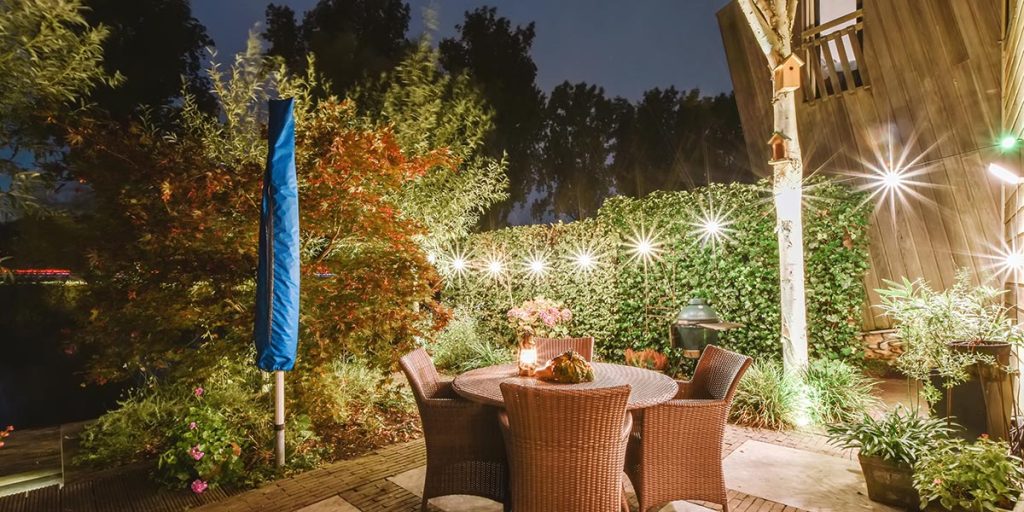
Outdoor lighting can take your home’s nighttime security and curb appeal to a new level, but only when the design and installation are done correctly.
Austin Outdoor Lighting Design understands how even minor errors can significantly impact a project’s effectiveness or waste energy. We’d like to help you avoid outdoor lighting mistakes that produce unsatisfactory results.
Here are some of the most common issues we encounter when assisting property owners in enhancing their outdoor lighting.
1. Why You Should Never Skip the Design Stage
Many homeowners purchase fixtures before planning where to place them. Without a design map, lights may appear uneven or fail to effectively highlight the desired areas. A deliberate plan defines purpose: safety, accent, or mood.
Local experts typically begin with a scaled layout that shows zones, fixture locations, wiring paths, and transformer placement. Layered lighting creates depth and function:
- Accent for beauty
- Ambient for general glow
- Safety for bright, clear illumination
Work with a design-first mindset to ensure your system delivers what you need while feeling cohesive rather than cluttered.
2. How Fixture Choice and Placement Can Make or Break Your Results
We often see typical lighting mistakes, such as glare and unsettling dark shadows, when owners choose the wrong type of fixture or place them at inappropriate angles. Spacing problems create a “runway” effect on walkways. Crowding fixtures can also create overwhelming brightness.
The solution involves choosing weather-rated fixtures that suit the purpose and location. A narrow-beam uplight flatters the trees and stonework, while low-path lights improve navigation without glare. Trusted professionals help with avoiding outdoor lighting mistakes by testing beam direction at night and adjusting spacing to achieve balance and comfort.
3. What Happens When You Ignore Glare and Light Pollution
It’s often surprising to homeowners when they find that excessive brightness turns their otherwise beautiful landscape into an entirely different, and uncomfortable, scene. Without careful glare control, fixtures can wash out textures, disturb wildlife, or even violate neighborhood ordinances.
Skilled designers utilize shielded fixtures, employ lower color temperatures between 2700 K and 3000 K, and select beam angles that minimize spillover. They also position lights to highlight textures while preserving the depth of shadows.
With this method, you’ll achieve visibility without glare and comfort without sacrificing contrast, all while maintaining a neighbor-friendly appearance.
4. Why Energy Efficiency and Maintenance Must Work Together
A well-lit home should never come with a large power bill. Systems that ignore energy efficiency waste money and require frequent upkeep. Using high-quality LED fixtures reduces energy consumption, heat output, and the need for replacement.
Proper wire gauge and transformer sizing prevent dimming or flicker. Adding timers, photocells, or smart controls keeps the system running only when needed. Routine maintenance maintains consistent brightness, including:
- Cleaning lenses
- Trimming plants
- Checking connections
Local professionals combine these practices to keep outdoor systems cost effective and reliable for years to come.
5. How Ignoring Landscape Aesthetics Undermines the Whole Design
Your lighting should complement your home’s natural setting. Ignoring landscape aesthetics leads to results that feel disconnected from the surroundings. Light should enhance plant life, pathways, and architectural details, rather than fighting against them.
Professionals avoid outdoor lighting mistakes by considering growth patterns, materials, and sightlines from both indoor and outdoor spaces. They highlight focal points such as trees, stone walls, or garden art while using ambient illumination to unify the scene. When the design respects the landscape, the yard glows naturally and beautifully.
6. Why Balance Matters: Don't Use Too Many or Too Few Lights
More lights don’t always mean better lighting. Overcrowded setups resemble parking lots, while sparse ones feel unsafe. Proper light placement focuses illumination only where needed, such as along paths, near steps, and around key features. The goal is to maintain visual consistency and depth.
Professionals evaluate the size of the yard and the brightness of each fixture. They adjust beam spread and brightness until the light feels warm and welcoming rather than overwhelming. Thoughtful restraint delivers elegance and comfort.
Austin Outdoor Lighting Design Understands Great Lighting
Austin’s seasonal weather requires outdoor lighting designs that utilize durable materials and smart controls. Summer heat, humidity, and storms test every fixture, so outdoor-rated brass or copper housings perform best. Austin’s local guidelines can also help with avoiding outdoor lighting mistakes.
When you want lighting that highlights your home’s beauty while saving energy and staying code-compliant, contact Austin Outdoor Lighting Design. Call (512) 601-4844 or contact us online to request a free quote and schedule a live demo.